

Skills to Survive in Today's World
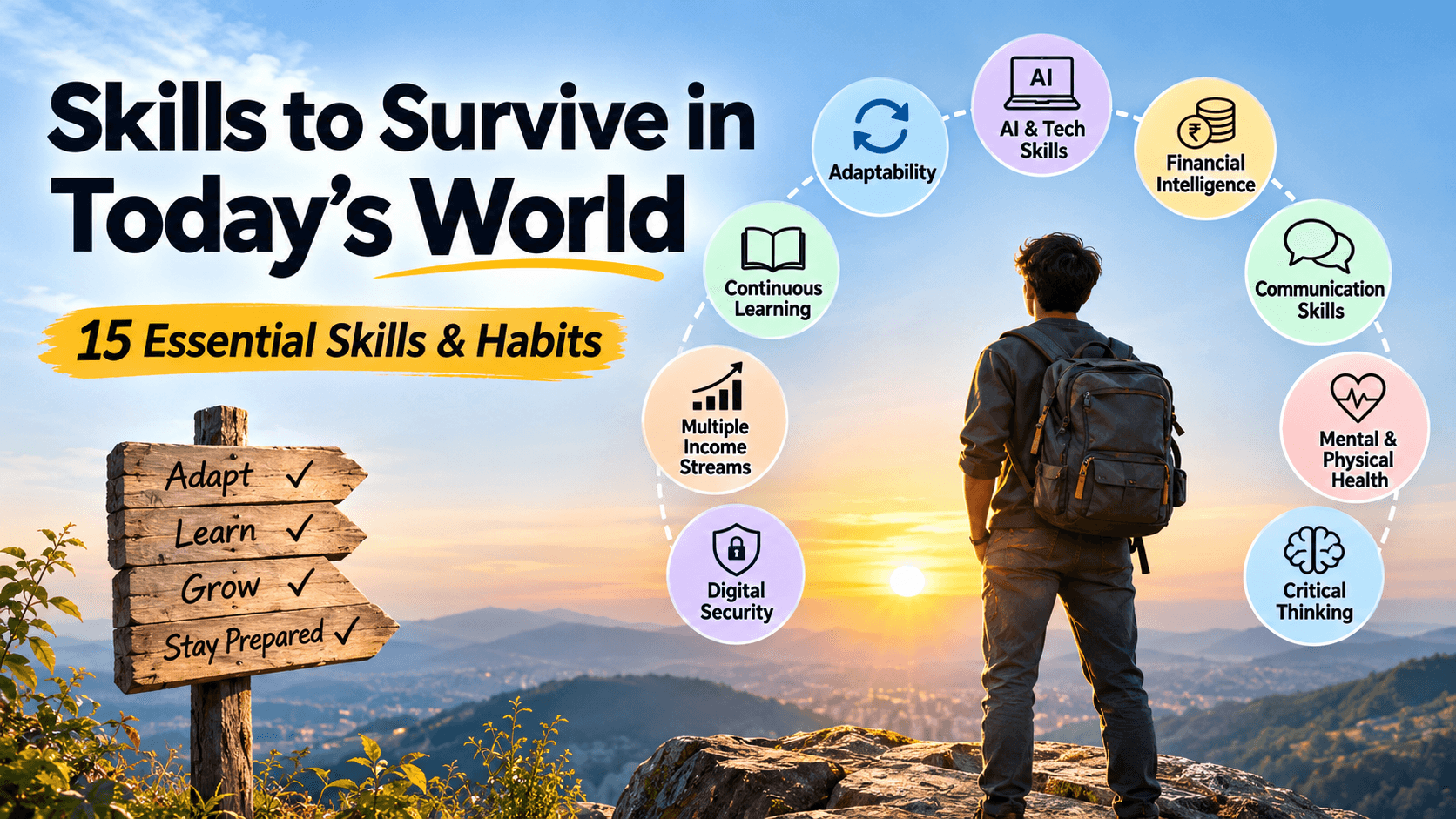
Skills to Survive in Today’s World
Skills to Develop
In order to survive in today’s world, we must be able to adapt our skills to suit technological changes, manage our money correctly, look after our health and continue to learn new skills.
Due to the rapid advances in technology, increased competition and changing nature of jobs, life in modern society is very different to the past.
There are many new opportunities, however, there are also many challenges. With easy access to information we must now know how best to use it.
How can we survive successfully in this changing world?
Read below to find out 15 skills and habits to develop to ensure a more secure and successful future.
---
15 Essential Skills and Habits to Develop
1. Be Adaptable
As time goes on, skills required in your field may change.
According to the 2025 Future of Jobs Report by the World Economic Forum around 39% of skills currently possessed by employees are expected to change or become obsolete by 2030. 170 million new jobs and 92 million lost jobs are expected worldwide by 2030.
What can you do?
- Keep learning new skills.
- Stay up to date within your field.
- Be open to new opportunities.
- Be able to solve problems.
Being adaptable is a very valuable skill.
2. Know About AI and Tech
AI is changing many sectors including education, healthcare, business and employment.
Even if you aren’t working in tech, knowledge of AI is very valuable.
Try learning how to use tools such as Chat GPT, Gemini, Canva and automation.
Valuable skills to have are:
- Data analysis.
- Digital Marketing.
- Coding.
- Cyber security.
- Cloud computing.
- Business Automation.
Try to solve problems using the technology.
3. Be Financially Intelligent
It is very important to not just make money, but to manage it well.
Having financial intelligence allows you to make better decisions, avoid taking on unecessary debt and be prepared for anything.
To improve:
- Keep a record of your monthly expenses.
- Save an emergency fund.
- Avoid taking any unecessary loans.
- Only invest once you understand what you’re investing in.
- Have suitable insurance.
If you earn 30,000 INR per month, you could aim to save 6,000 INR per month and invest 3,000 INR per month (depending on your financial commitments).
Having discipline with your money will allow you to gain financial independence.
4. Create Multiple Income Streams
Having only one income can be risky.
Consider creating another income by doing:
- Freelance work.
- Blogging/Content Creation.
- Online lessons.
- E-commerce.
- Digital products.
- Consultencies/Professional Services.
However, do not try to start multiple businesses. Just create one reliable secondary income source first.
5. Improve Communication Skills
Good communication will help in interviews, business and working in teams.
Improve by:
- Speaking well.
- Writing good emails.
- Listening well.
- Confidently presenting ideas.
- Negotiating well.
You do not need fluent English to communicate well. As long as you can communicate clearly, confidently and express your ideas then communication will be fine.
6. Look After Mental Health
In today’s busy world, it can be hard to look after your mental health.
Using social media too much can cause negative comparisons and may be a waste of time.
According to the 2025 Commission on Social Connection released by the WHO, it is very important that social isolation and loneliness are addressed.
To improve mental health:
- Limit unecessary screen usage.
- Have healthy relationships.
- Do regular exercise.
- Have good sleeping patterns.
- Take time away from digital entertainment.
- Get professional support where necessary.
Being mentally strong means being able to handle problems in a positive way.
7. Look After Physical Health
Looking after your physical health will mean that you can be as productive as possible.
Simple habits to create:
- Exercise regularly.
- Eat healthily.
- Get enough sleep.
- Drink plenty of water.
- Avoid smoking.
- Get correct health checks.
You don’t need to go to an expensive gym. Just be consistent.
8. Be Aware of Digital Security
With much of our day to day life being digital, it is very important to be aware of digital fraud and cybercrime.
To protect yourself:
- Ensure you have strong and unique passwords.
- Enable two factor authentification.
- Never give out OTPs or UPI PINs.
- Be careful of clicking on dubious links.
- Check that payments are wanted.
- Ensure apps are updated.
In India, if you fall victim to financial cyber crime, contact 1930 or visit the National Cyber Crime Reporting portal (https://cybercrime.gov.in/ )
Being aware of digital dangers is an important life skill to develop.
9. Always Learn
Learning doesn’t stop after leaving school/University.
As industries change, technology changes and higher expectations in professions, it is vital to continue learning.
Develop skills in:
- Professional skills: programming, marketing, finance and management.
- Personal skills: discipline, communication, decision making.
- Practical skills: negotiation, sales and problem solving.
Every day try to spend between 30-60 mins learning and practicing skills.
Although watching tutorials is great, to become good at the skills apply what you learn to a project.
10. Network Well
By building relationships in a professional setting you could be introduced to new opportunities, partnerships, mentors and clients.
Build good relationships by:
- Connecting with professionals in the industry.
- Joining professional groups.
- Attending events.
- Providing useful knowledge.
- Helping others.
Remember, networking should be done to build trustful and beneficial relationships.
11. Think Critically
Not all information online is accurate.
There is more and more of fake news, misleading advertising, investment scams and manipulated content.
Before accepting any information, consider:
- Is this a reliable source?
- Is there evidence to back this up?
- Is the information current?
- Can this be verified by someone else?
Never make big financial or personal decisions based solely off of viral information.
Be able to think for yourself and make intelligent judgements on information.
12. Sales Skills
Many people must use sales skills in their life.
Students have to sell their talents in an interview, freelancers provide services and entrepreneurs sell products/solutions.
Improving your understanding of what the customer needs, communicating value and building trust can greatly benefit your career/business.
Ethical sales skills are a great skill to have in a profession.
13. Emotional Intelligence
Your decision making can be affected by emotions.
Improving emotional intelligence can teach you how to manage your emotions appropriately.
For example:
- Don’t make financial decisions when feeling pressured.
- Don’t act on impulse with criticism.
- Deal with arguments professionally.
- Accept constructive feedback.
- Don’t compare yourself to others.
Whilst you can’t control everything, you can improve how you react to situations.
14. Be Prepared for Changing Jobs
Having a degree does not guarantee you a job.
According to the Periodic Labour Force Survey in 2023-2024 by the Government of India, around 10.2% of people aged 15 to 29 were unemployed (using the usual status method).
Therefore it is very important to have practical skills and be employed able.
Students and recent graduates should:
- Create practical projects.
- Create a professional portfolio.
- Get Internships.
- Learn relevant tools for the industry.
- Improve interview skills.
- Improve communication skills.
Whilst having a certificate shows you have completed a course, creating a practical project shows what skills you have.
15. Don’t Compare Yourself to Others
On social media people tend to display their achievements. However, we rarely see the full story behind them.
People might be in great jobs, have expensive cars or be very successful in business, however we rarely see the struggles they have faced.
Everyone’s situation is completely different.
Instead of comparing your life to others’, compare your progress to yourself.
- Are you learning new skills?
- Improving your money?
- Becoming healthier?
- Making better decisions?
Focus on improving your own future.
---
Practical Plan to Grow Over 90 Days
This doesn’t have to be done immediately. Try making small changes.
Weeks 1–3
- Know what your strengths/weaknesses are.
- Note down your spending.
- Reduce unecessary screen time.
- Choose one professional skill to develop.
- Get into a regular exercise routine.
Weeks 4–6
- Create a practical project.
- Learn useful AI skills.
- Improve communication.
- Begin putting money aside regularly.
- Build professional connections.
Weeks 7–9
- Share your work/portfolio.
- Apply for opportunities or get clients.
- Check your progression with money.
- Identify areas to improve.
- Set what you want to achieve in the next 90 days.
We want to develop sustainable growth.
---
Conclusion
To survive in today’s world we must have more than a high grade in school or a high salary.
We must be financially disciplined, aware of technologies, be able to communicate well, be physically healthy and have a desire to learn.
You don’t need to be a millionaire or an expert in technology. You need to be able to adapt to uncertain situations, solve problems and add value.
Remember,
Don’t just prepare for the opportunities today, prepare for the challenges in the future.
The world will continue to change so ensure that you continue to grow.
Frequently Asked Questions (FAQs)
1. What is the most important skill to survive in today's world?
Adaptability is one of the most important skills. Technology, jobs and industries are constantly changing, so the ability to learn new things, solve problems and adjust to new situations is essential.
2. Which free skill should everyone learn before turning 30?
Everyone should develop financial literacy, communication, digital skills and critical thinking. These skills are useful in almost every profession and everyday situation.
3. What skills will still be useful 5–10 years from now?
Skills such as problem-solving, communication, financial management, critical thinking, sales, adaptability and emotional intelligence are likely to remain valuable even as technology advances.
4. Can AI replace human skills?
AI can automate many repetitive tasks, but human abilities such as creativity, leadership, emotional intelligence, negotiation and critical thinking remain important. Learning to work alongside AI is a better strategy than ignoring it.
5. What is the best skill to learn to earn money online?
Some practical options include digital marketing, graphic design, web development, content creation, video editing and freelancing. Choose one skill, build a portfolio and start working on real projects.
6. How can I become financially independent?
Start by tracking your expenses, saving regularly, building an emergency fund, avoiding unnecessary debt and learning about investments. Financial independence requires consistent financial discipline.
7. What are some basic life skills everyone should know?
Everyone should learn basic cooking, first aid, money management, communication, problem-solving, digital security, time management and practical household maintenance.
8. How can students prepare for the future job market?
Students should focus on practical projects, internships, industry-relevant tools, communication skills and professional networking. A degree is valuable, but practical skills demonstrate what you can actually do.
9. What is one underrated skill that can improve your life?
Critical thinking is an underrated skill. It helps you identify misinformation, avoid scams, make better decisions and evaluate opportunities instead of blindly following others.
10. How much time should I spend learning new skills every day?
Try spending 30–60 minutes every day learning and practising a useful skill. Focus on practical application rather than just watching tutorials or collecting certificates.