

What Is a Large Language Model? A Simple Guide With Examples

What Is a Large Language Model? A Simple Guide (With Examples)
A large language model (LLM) is an AI program trained on huge amounts of text so it can understand and write human language. It works by predicting the next word in a sentence, again and again, very fast. ChatGPT, Google Gemini, Claude and Meta's Llama are all large language models.
That's the short answer. If you've ever asked ChatGPT to write an email or explain a topic, you've already used one.
In this guide, we'll keep things simple. You'll learn what LLM really means, how it works (without the maths), real examples, the popular model

Large Language Model Meaning in Simple Terms
Let's break the name into three parts:
Large: It is trained on a massive amount of text (books, websites, articles, code) and has billions of internal settings called parameters.
Language: Its main job is to read and write words, in English, Hindi and many other languages.
Model: It's a mathematical system that has learned patterns from all that text.
Think of it like this. Imagine a student who has read almost every book in the library. You start a sentence, and they can finish it in a way that sounds right. They don't "know" things the way you do. They've just seen so many sentences that they're very good at guessing what comes next.
That's an LLM. A very well-read guesser

LLM full form: LLM stands for Large Language Model. When people say "LLM in AI", they mean the same thing.
How Does a Large Language Model Work?
You don't need a tech background to get this. Here's what happens, step by step.
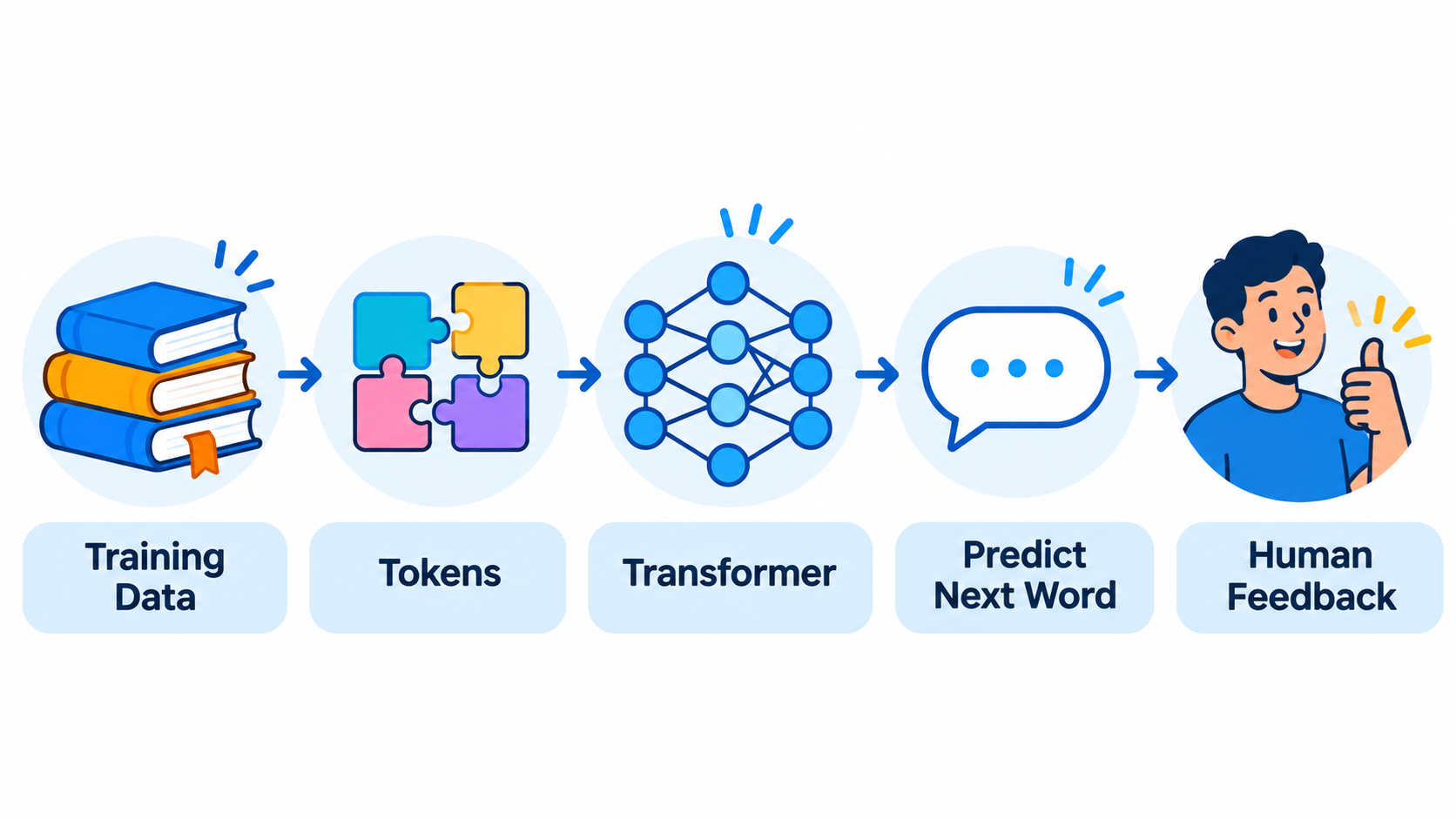
1. It reads a huge amount of text (training)
The model is fed text from books, websites and other sources. Modern models learn from trillions of words. For example, Meta trained Llama 3.1 on more than 15 trillion tokens, according to Elastic's breakdown of the model.
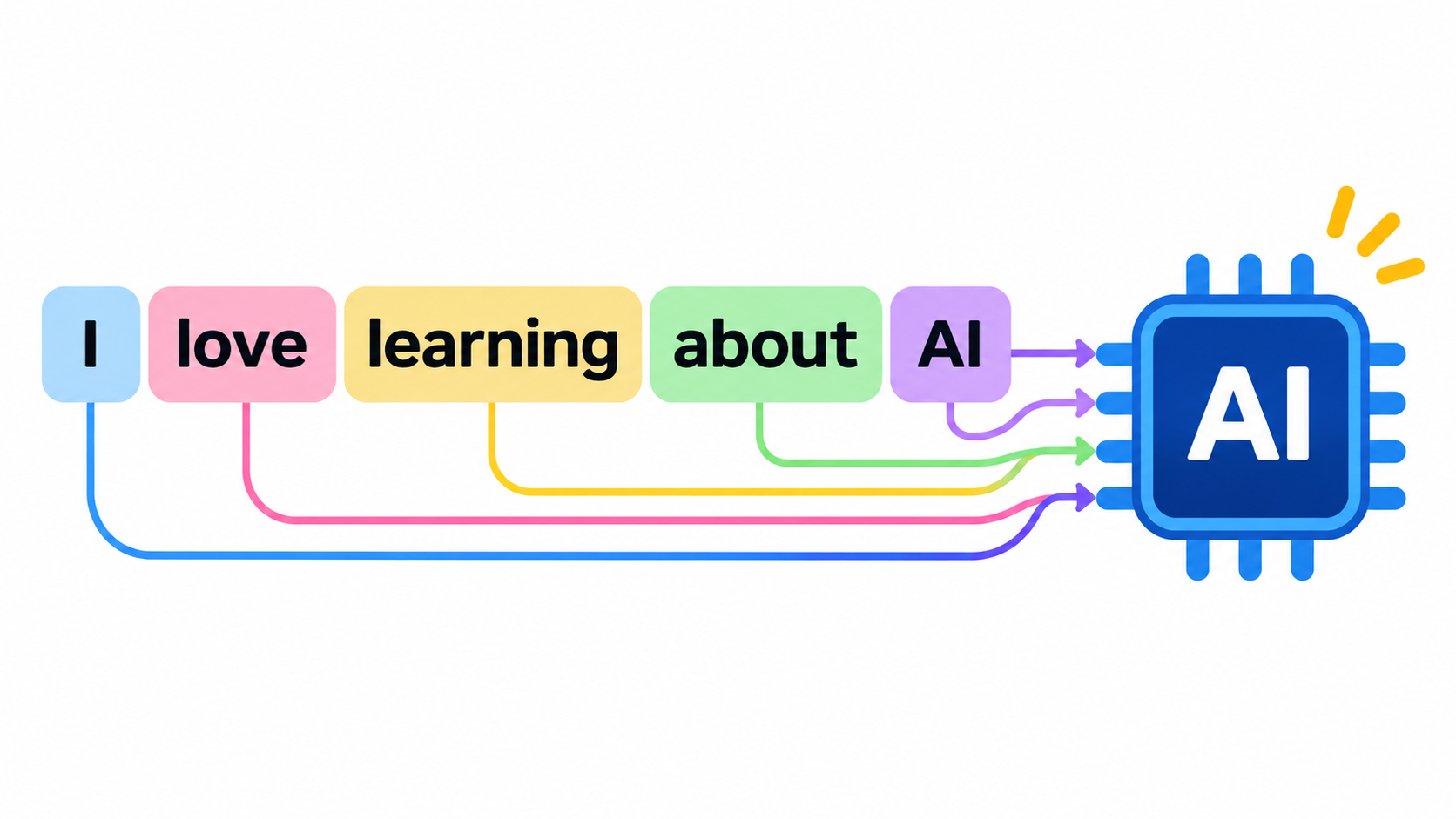
2. It breaks words into small pieces (tokens)
The model doesn't see words the way we do. It splits text into small chunks called tokens. A token can be a full word like "shop" or part of a word like "ing". Roughly, 100 tokens equal about 75 English words.
3. It learns patterns using a "transformer"
Almost every LLM today is built on a design called the transformer, introduced by Google researchers in 2017 in a paper called "Attention Is All You Need". The key idea is attention: the model looks at all the words in a sentence together and figures out which ones matter most to each other.
So in "The bank by the river was flooded", it understands "bank" means a riverbank, not a place to keep money.
4. It predicts the next word
When you type a question, the model predicts the most likely next token, adds it, then predicts the next one, and so on. That's how a full answer appears word by word on your screen.
5. It gets polished by humans (fine-tuning)
A raw model can be messy. So companies fine-tune it with examples and human feedback. This step is called RLHF (reinforcement learning from human feedback). It teaches the model to be helpful, follow instructions, and avoid harmful answers.
A Short History of Large Language Models
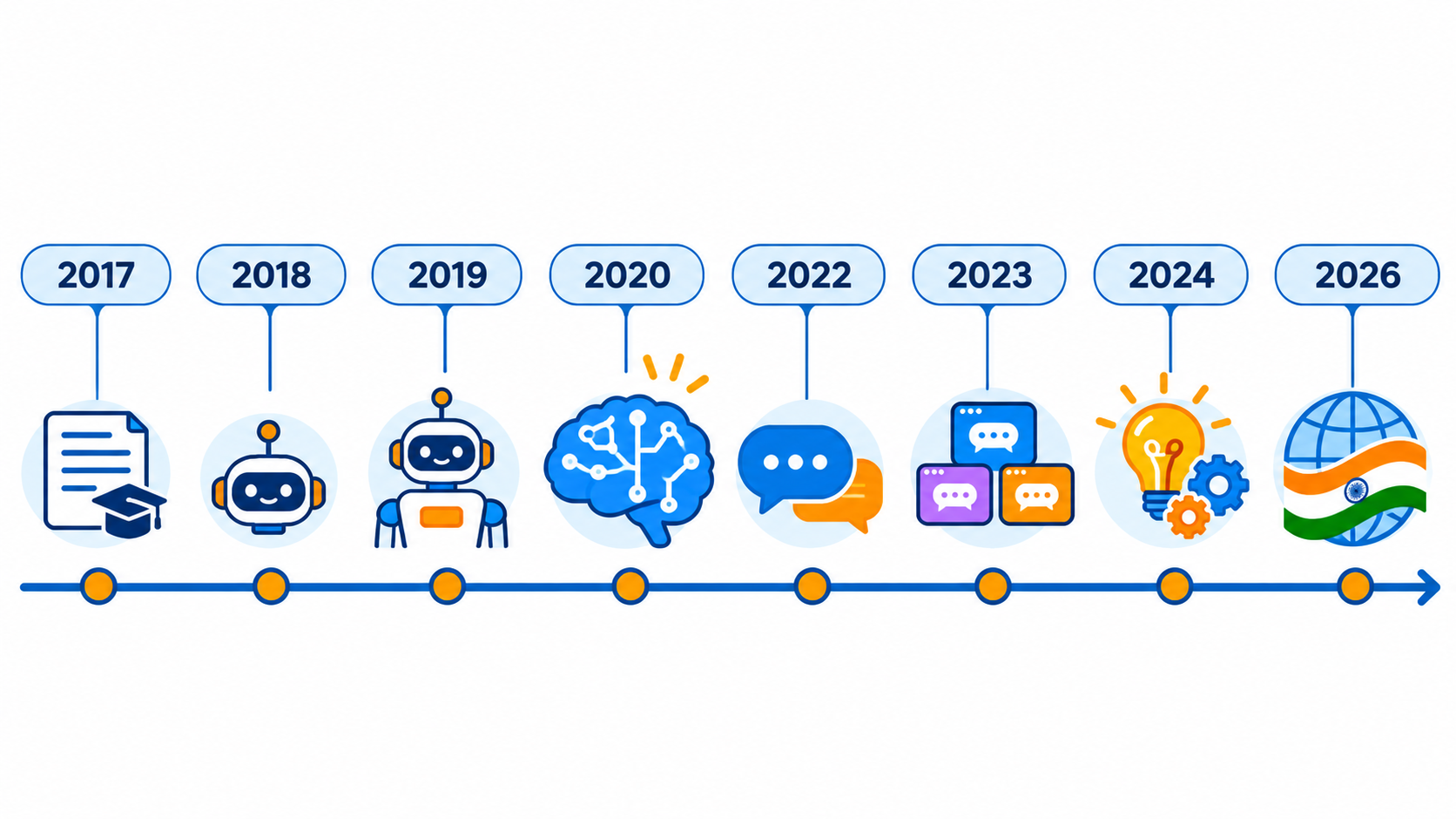
LLMs feel new, but they've been building up for years. Here's the quick timeline:
Year | What happened | Why it mattered |
|---|---|---|
2017 | Google researchers publish "Attention Is All You Need" | Introduced the transformer, the design almost every LLM uses today |
2018 | OpenAI releases GPT-1; Google releases BERT | GPT-1 had about 117 million parameters. BERT made Google Search better at understanding questions |
2019 | GPT-2 (1.5 billion parameters) | Could write paragraphs that sounded human |
2020 | GPT-3 (175 billion parameters) | Showed that bigger models could do many tasks without special training |
2022 | ChatGPT launches on November 30 | Reached an estimated 100 million users in about two months, one of the fastest-growing apps ever |
2023 | GPT-4, Claude, Gemini and Meta's open Llama models arrive | The AI race begins, and open models become free to download |
2024 | "Reasoning" models appear | Models start thinking step by step before answering, so maths and coding improve a lot |
2025 to 2026 | Cheap open models (DeepSeek), million-token context windows, India's own LLMs | Powerful AI becomes cheaper and available in Indian languages |
In short, it took about five years to go from a research paper to a chatbot used by hundreds of millions of people every week.
Is ChatGPT a Large Language Model?
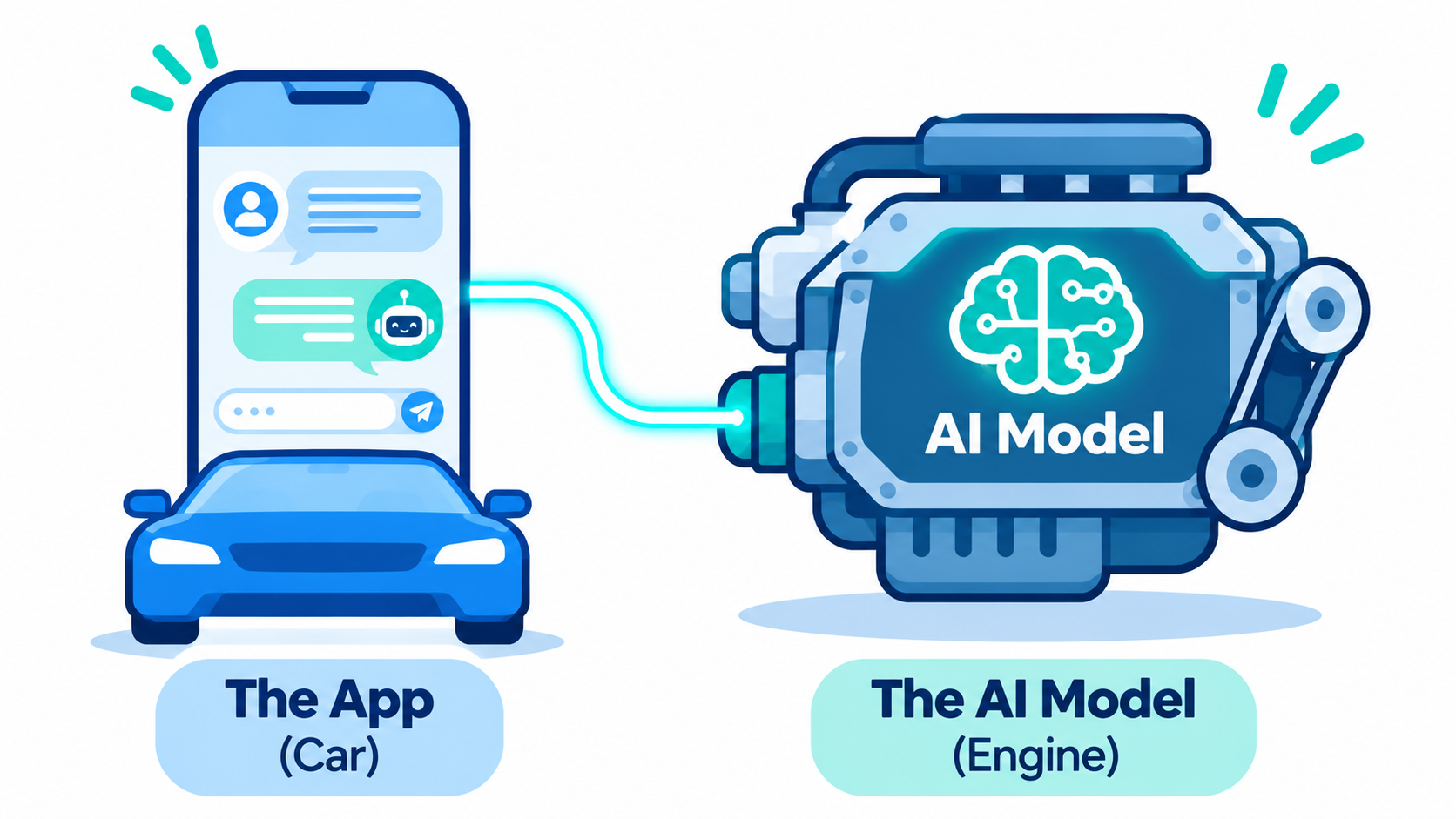
Yes, and also no. ChatGPT is a chatbot app made by OpenAI. The "brain" inside it is a large language model from OpenAI's GPT family (GPT stands for Generative Pre-trained Transformer).
So the simple way to say it: ChatGPT is a product, and GPT is the LLM that powers it. The same goes for Google Gemini (app) running on Gemini models, and Claude (app) running on Claude models.
And ChatGPT is huge. OpenAI CEO Sam Altman said in February 2026 that India alone has 100 million weekly active ChatGPT users, making India its second-largest market after the US (TechCrunch, Feb 15, 2026). Globally, ChatGPT had about 800 million weekly users as of October 2025.
Large Language Models Examples You Already Use
LLMs aren't just chatbots. You probably use them every day without noticing:
Chat assistants: ChatGPT, Gemini, Claude, Microsoft Copilot, Meta AI on WhatsApp and Instagram.
Writing help: Gmail's "Help me write", grammar tools, caption generators.
Search: Google's AI Overviews at the top of search results are written by an LLM.
Customer support: Chatbots on bank, telecom and e-commerce sites.
Coding: GitHub Copilot and similar tools that write and fix code.
Translation: Turning English text into Hindi, Bengali, Tamil and more, in seconds.
Summaries: Shrinking a long PDF, report or meeting into a few bullet points.
List of Large Language Models (Popular in 2026)
There are dozens of LLMs today. Here are the big names you'll hear most often, as listed in IBM's LLM list and Azumo's November 2026 rankings.
Model | Made by | Open or closed | Known for |
|---|---|---|---|
GPT-5.5 | OpenAI | Closed | Powers ChatGPT; strong all-rounder with a context window of about 1 million tokens |
Claude Opus 4.7 | Anthropic | Closed | Writing, reasoning and coding |
Gemini 3.5 | Google DeepMind | Closed | Built into Google Search, Android and Workspace |
Grok 4.3 | xAI | Closed | Built into X (Twitter); low price per token |
Llama 4 (Scout, Maverick) | Meta | Open weight | Free to download; Scout supports a 10 million token context window |
DeepSeek V4 | DeepSeek (China) | Open weight | Very low cost per use |
Mistral Large 3 | Mistral AI (France) | Open weight | Popular with European businesses |
Qwen3 | Alibaba | Open weight | Strong at coding and many languages |
Model versions change every few months, so treat this as a snapshot of late 2026.
Open source vs closed source LLMs
Closed models (like GPT and Claude) are used through an app or a paid API. You can't see or change the model itself.
Open-weight models (like Llama and DeepSeek) can be downloaded and run on your own servers. That's useful for companies that want full control over their data.
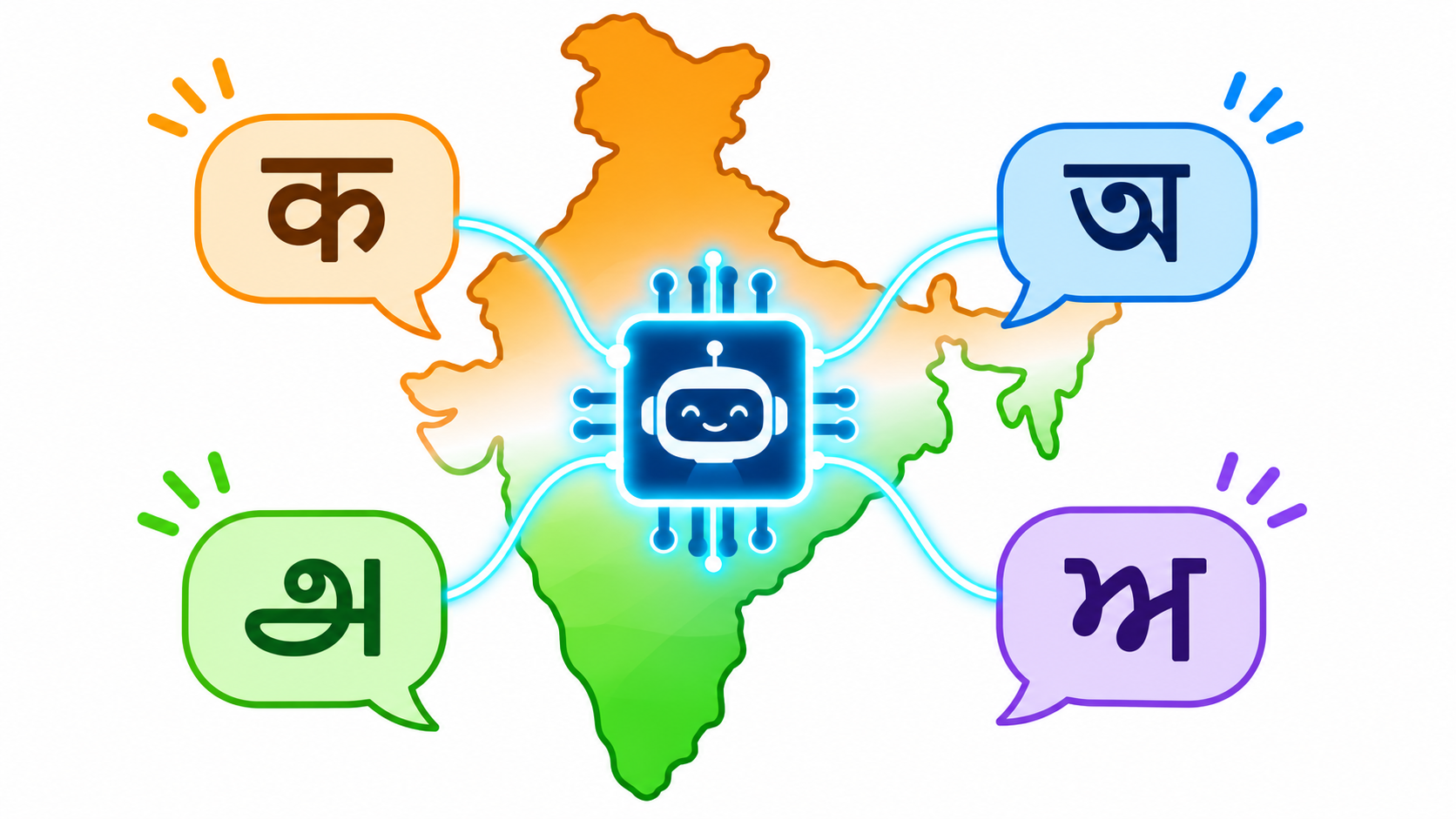
Large Language Models Made in India
Most famous LLMs come from the US and China. But India is now building its own, trained to understand Hindi and other Indian languages much better than global models.
At the India AI Impact Summit in New Delhi in February 2026, several Indian models were unveiled under the government's IndiaAI Mission:
Sarvam AI (Bengaluru): Launched open-source models with 30 billion and 105 billion parameters, built for Indian languages. Sarvam was picked by the IndiaAI Mission to build India's sovereign LLM.
BharatGen: A government-backed project led by IIT Bombay. It unveiled Param 2, a multilingual model focused on Indian languages.
Gnani.ai: Builds voice-first AI models, useful for call centres and customers who prefer speaking over typing.
Krutrim (Ola): One of India's first homegrown LLMs, launched in December 2023, with support for many Indian languages.
Why does this matter? Hundreds of millions of Indians are more comfortable in Hindi, Bhojpuri, Bengali, Tamil or Marathi than in English. Indian LLMs can answer them in their own language, and they keep sensitive data inside the country.
Types of Large Language Models
Not every LLM is the same. Here are the main types you'll come across:
1. Base models
These are raw models trained only to predict the next word. They're good at continuing text but not great at following instructions. Developers use them as a starting point.
2. Instruction-tuned (chat) models
These are base models that have been fine-tuned to follow instructions and hold a conversation. The models inside ChatGPT, Gemini and Claude are this type.
3. Reasoning models
These models "think" step by step before giving an answer. They take a little longer but do much better at maths, logic, coding and planning.
4. Multimodal models
These can work with more than text. You can show them a photo, a chart or a PDF, or talk to them with your voice. Most top models in 2026 are multimodal.
5. Small language models (SLMs)
These are lighter models with fewer parameters, like Microsoft's Phi or Google's Gemma. They can run on a laptop or even a phone, which makes them cheaper and more private.
Large Language Model vs Generative AI: What's the Difference?
Generative AI is the big umbrella. It covers any AI that creates new content: text, images, music or video.
A large language model is one type of generative AI that focuses on text (and, more and more, images and audio too).
Large Language Model | Generative AI | |
|---|---|---|
Scope | Mainly text and language | Text, images, video, audio, music |
Examples | GPT, Gemini, Claude, Llama | LLMs plus image tools like Midjourney and video tools like Sora |
Relationship | A part of generative AI | The whole category |
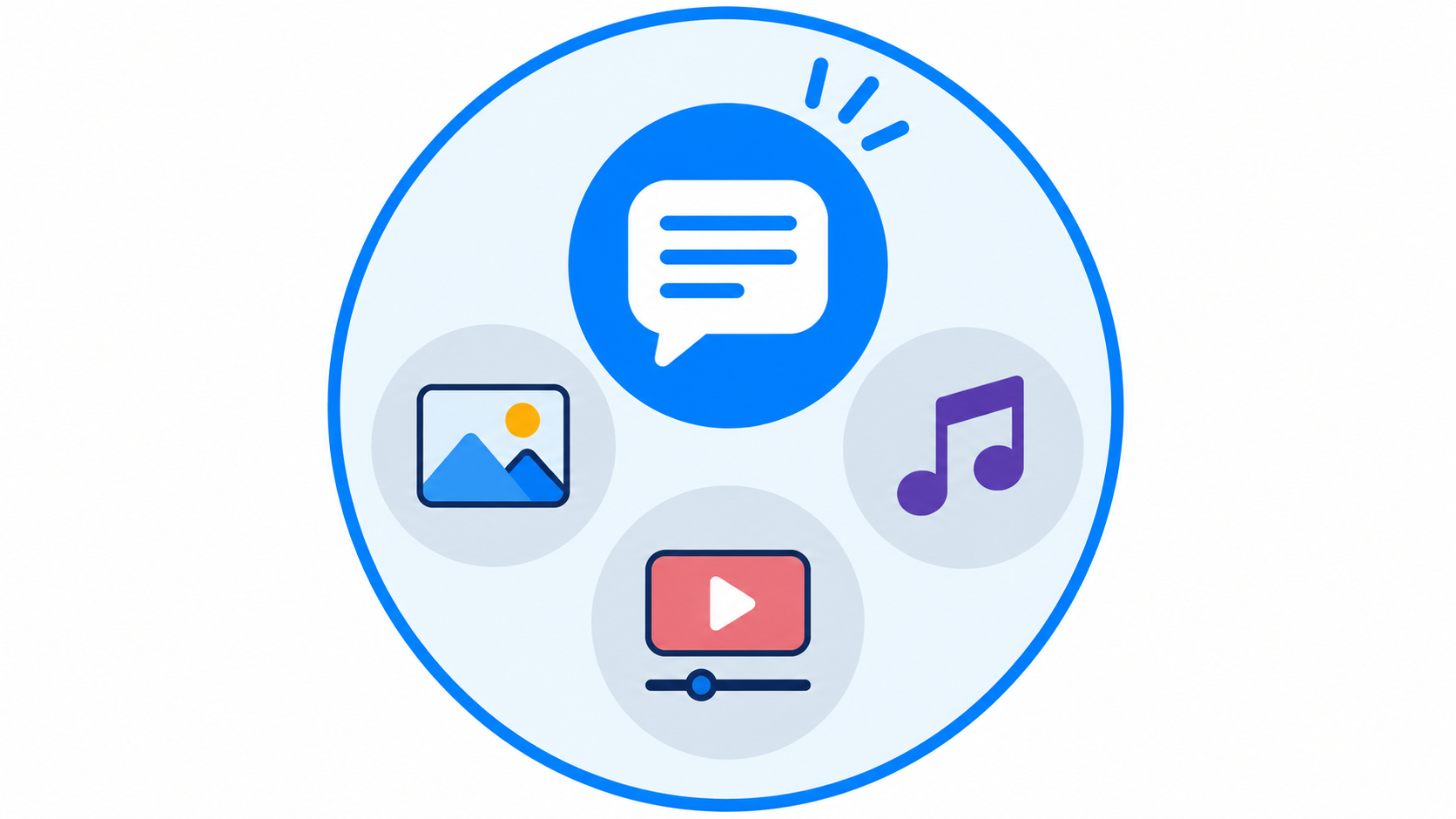
Many new LLMs are multimodal, which means they can also look at photos, read charts and listen to audio. So the line is getting blurry.
What Is a Large Language Model Primarily Used For?
Here are the most common uses, for people and businesses:
Writing content: Blogs, ad copy, product descriptions, social media posts.
Answering questions: Explaining topics, homework help, research.
Customer service: 24/7 chatbots that reply on websites and WhatsApp.
Coding: Writing, checking and explaining code.
Data work: Summarising reports, pulling key points from documents.
Translation: Reaching customers in their own language.
Automation: Sorting emails, filling forms, drafting replies.
India is a big part of this story. OpenAI's own research says Indian users lead the world in using ChatGPT for coding and data analysis, and India has the largest number of student ChatGPT users in the world.
How small businesses in India can use LLMs
You don't need a big IT team. A local shop, clinic, coaching centre or agency can use LLMs to:
Write Google Business posts and Instagram captions in minutes.
Set up a WhatsApp chatbot that answers common customer questions in Hindi and English.
Draft ad copy for Google Ads and Meta Ads, then test which version works best.
Write product descriptions for an online store.
Reply to customer reviews politely and quickly.
At Zenvotechnology, we help businesses in Bihar and across India add AI-powered chatbots, automation and smarter ad campaigns to their websites and apps.
Limitations of Large Language Models
LLMs are powerful, but they're not perfect. Keep these in mind:
Hallucinations: An LLM can say something false with full confidence. It may even make up a source. Always fact-check important answers.
Knowledge cutoff: A model only knows what was in its training data, unless it's connected to live search.
Bias: If the training text had bias, the model can repeat it.
Privacy: Don't paste passwords, customer data or private documents into public chatbots.
Energy use: Training big models uses a lot of electricity. Oracle estimates training GPT-4 took around 50 GWh, about what 4,500 to 5,000 US homes use in a year.
Curious whether AI will take over human jobs? We covered that in detail in Can AI Replace Humans?
LLM Terms Explained (Quick Glossary)
You'll see these words a lot when reading about AI. Here's what each one means in plain English:
Parameters: The internal settings a model learns during training. More parameters usually means a more capable model, but also a more expensive one to run.
Token: A small piece of text (a word or part of a word). AI companies charge based on the number of tokens you use.
Context window: How much text the model can read and remember at one time, measured in tokens. A bigger window means it can handle longer documents.
Prompt: The instruction or question you type into the AI.
Prompt engineering: Writing prompts in a clear, detailed way to get better answers.
Hallucination: When the AI gives a wrong or made-up answer that sounds confident.
Fine-tuning: Extra training on a smaller, specific dataset to make a model better at one job, like legal writing or customer support.
RAG (retrieval-augmented generation): Connecting an LLM to your own documents or website, so it answers using your real data instead of guessing.
Inference: The moment the model actually generates an answer for you.
Open weight: A model whose files are public, so anyone can download and run it.
AI agent: An LLM that can take actions, like searching the web, booking a slot or sending an email, not just chat.
How to Learn About Large Language Models (Courses, Books and PDFs)
Want to go deeper? You don't need a computer science degree. Here's a simple path, from beginner to advanced:
Free courses
Google's Introduction to Large Language Models: A short free course on Google Cloud Skills Boost. Good for complete beginners.
Microsoft's Generative AI for Beginners: A free lesson-by-lesson course on GitHub.
Hugging Face LLM Course: Free and hands-on, for people who know a little Python.
DeepLearning.AI short courses: Free 1 to 2 hour courses on prompt engineering, RAG and AI agents.
Andrej Karpathy on YouTube: His "Intro to Large Language Models" talk explains LLMs clearly in about an hour.
Books
Build a Large Language Model (From Scratch) by Sebastian Raschka: Walks you through building a small LLM step by step. Best if you know Python.
Hands-On Large Language Models by Jay Alammar and Maarten Grootendorst: Lots of visuals, very beginner friendly.
AI Engineering by Chip Huyen: For people who want to build real products with LLMs.
Free PDFs and papers
"Attention Is All You Need" (2017): The original transformer paper, free on arXiv.
"A Survey of Large Language Models": A free, regularly updated overview paper on arXiv that covers almost everything about LLMs.
Tip: Avoid random sites offering "free PDF" copies of paid books. Many of them are pirated or carry malware. Use official sources or your library instead.
Key Facts About Large Language Models
The transformer design behind modern LLMs was introduced in 2017.
GPT-3 (2020) had 175 billion parameters. Today's biggest open models go past 1 trillion parameters (for example, Kimi K2 from Moonshot AI).
Some 2026 models can read up to 1 million tokens at once, roughly 750,000 words, about the length of several full novels.
India has over 100 million weekly ChatGPT users (Feb 2026).
At the February 2026 India AI Impact Summit, Sarvam AI released open-source Indian-language models with up to 105 billion parameters.
The global LLM market was about $6.5 billion (around ₹55,000 crore) in 2024 and is projected to reach $140.8 billion by 2033, per figures cited by Exploding Topics.
Frequently Asked Questions
What is a large language model in simple words?
It's an AI that has read a huge amount of text and learned to understand and write language by predicting the next word. ChatGPT is the most famous example.
What is LLM in AI?
LLM stands for Large Language Model. It is the type of AI that powers chatbots, writing tools and AI search answers.
Is ChatGPT a large language model?
ChatGPT is an app. It runs on OpenAI's GPT large language models. So ChatGPT uses an LLM, and people often call it one.
What are some examples of large language models?
GPT-5.5 (OpenAI), Claude (Anthropic), Gemini (Google), Llama 4 (Meta), DeepSeek V4, Grok (xAI), Mistral and Qwen (Alibaba).
Is Google Gemini an LLM?
Yes. Gemini is Google's family of large language models. It also powers the Gemini app and AI Overviews in Google Search.
What is the difference between AI and a large language model?
AI is the broad field of making machines smart. An LLM is one specific kind of AI that works with language.
Can I use a large language model for free?
Yes. ChatGPT, Gemini, Claude and Meta AI all have free versions. In India, OpenAI also made its ChatGPT Go plan free for a year for Indian users.
Where can I learn about large language models (course or book)?
Start with free courses from Google, Microsoft and Hugging Face. For a book, try "Build a Large Language Model (From Scratch)" by Sebastian Raschka or "Hands-On Large Language Models" by Jay Alammar. See the full list in the learning section above.
Are there any Indian large language models?
Yes. Sarvam AI, BharatGen (Param 2), Gemini.ai and Ola's Krutrim are Indian LLMs built to understand Hindi and other Indian languages.
What is the context window of an LLM?
It's how much text the model can read at once, measured in tokens. Some 2026 models can handle about 1 million tokens, roughly 750,000 words.
Are large language models safe to use for business?
Yes, if you use them carefully. Check facts before publishing, don't share private customer data with public tools, and use business plans that keep your data private.
Final Thoughts
A large language model is simply an AI that learned language by reading a lot. It predicts words, one after another, well enough to write, explain, translate and code.
You don't need to understand the maths to benefit from it. Start small: use it to write a post, answer a customer, or summarise a report. Then grow from there.
Want to use AI to grow your business with chatbots, automation or better ads? Talk to Zenvotechnology. We're based in Muzaffarpur, Bihar, and work with businesses across India.
Sources: IBM, "What are large language models?" and "A list of large language models"; Elastic, "What is a large language model?"; Oracle, "What Are Large Language Models?"; TechCrunch, "India has 100M weekly active ChatGPT users, Sam Altman says" (Feb 15, 2026); Azumo, "Best LLMs in November 2026"; Exploding Topics, "Top 50+ Large Language Models"; OpenAI, "How India uses ChatGPT"; Business Today, "Sarvam AI launches 30B and 105B open-source models" (Feb 2026); Digit, "India AI Impact Summit 2026: BharatGen Param 2, Sarvam AI and the rise of Indian LLM models".